Friday, December 10, 2021

Our House is on a Floodplain. Why? Clay Stratification

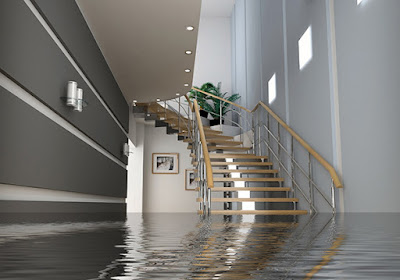
Our house in North York/Toronto is on a floodplain.

I learned this recently thanks to a helpful neighbour. I was walking home from dropping off my son at school, and one of our neighbours was doing the same after dropping off his son, and we were both looking at the new construction of a building near the school.

The new building has a giant basement. Two stories. Something similar to an "iceberg home" where most of the house is actually below ground.

My neighbour was laughing at it however and predicted that it was going to get flooded...

And that was when I learned our entire neighbourhood was on a floodplain.

It wasn't something we were told about when we leased the property, but it is definitely an issue.

Now you might think, like I did: "Wait, isn't our house on a hill? How can it be on a floodplain?"

The problem is the soil.

Clay Stratification

Most drainage issues are caused by clay soil. A minor issue will be that you have standing water after a heavy rainfall for less than a day, and it will be more noticeable in your front yard and backyard. Clay soil is more dense than sandy or loamy soil, and therefore, is slower to allow rainwater to filter through it.

Clay Stratification is when you have multiple layers of dense clay, the result of millions of years of rainfall, rivers and flooding, etc. When one layer of clay stratification becomes flooded it acts like a barrier, so that water above it just sits there and can only move sideways, but not down.

Get too much water all at once, and the next thing you know your basement is flooded because it acts like a well where the water can collect. Many basements aren't designed to withstand that much water trying to get in. This is a big problem for many parts of Toronto because clay stratification is actually surprisingly common.

Why does Toronto have so much clay stratification?

Go back 12,000 years ago and all of Toronto, the GTA and the Great Lakes region was under a big inland sea. As time went by the water levels receded and it left behind layers of clay bits and loamy bits, resulting in many layers of clay and loam.

Factor in that Toronto is also effectively an ancient river delta, and yeah... That's a lot of clay.

So what can you do about it?

Knowledge is key.

#1. You need to ask "Is this property on a floodplain?"

And make a note of how the owners respond.

#2. Get it in writing.

Because people do lie about floodplains and it can lead to lawsuits when people later find out that they bought property on a flood plain. (Or bought a house with mold problems. Or bought a house with termites. The previous owners need to be disclosing these problems.)

#3. Ask "What steps have been taken to prevent flooding?"

Because chances are likely if your property is in Toronto, then it is probably on a flood plain. Even if it is on top of a hill.

#4. Get home owners insurance.

But you might also get other types of insurance too. Eg. Buyer's Title Insurance for example. Or Mortgage Insurance if you are getting a mortgage.

And flood insurance if you are in a high risk location.

Basement Flooding on the Rise thanks to Climate Change

Yeah... So this isn't a problem that is just going to go away. Places that aren't traditionally thought as being flood prone these days are getting flooded anyway. Climate Change means that Toronto now has a rainy season from April to May.

And we can still get large deluges of water thanks to freak rainstorms like that one on July 8th 2013.

I was outside when that flood happened. Toronto got 126 mm of rain in only a few hours. And while that doesn't seem like much, remember that water flows downhill and will flood basements, parking garages, subway stations, floodplains, lower streets, etc along the way.

Here's some video of what happened on July 8th 2013:


Thursday, November 18, 2021

Real Estate Bubble making Canada's Wealth Gap Worse

Canada's real estate bubble is going to burst. It is just a matter of when.

With the pandemic and other factors fueling housing prices, plus rampant speculation, it is really just a matter of time before housing prices become unaffordable and the market collapses under economic pressures.

And if you look around at all the economic pressures, you know it is going to happen.

The bubble has to burst. Toronto and Vancouver rank up there with San Francisco and Los Angeles for the most expensive real estate markets, and while Canada's market has been stable... Our median incomes haven't been going up enough to justify the rapid increases in home prices.

Eventually the wealth gap between rich and middle class will make it impossible for even middle class people to afford a house unless they take out huge mortgages they cannot afford. And when the next big recession hits...


Wednesday, November 10, 2021

Super Basements and Iceberg Homes

 Iceberg Homes are pretty much what you imagine them to be. Houses that are bigger below the ground than they actually appear to be. It is a growing trend in architecture (especially for homes belonging to billionaires) where they build a massive underground structure, but have lots of room to store all their things... And for entertaining guests / having parties.

Basically it is just another way for the rich to show off their wealth.

There's only one major flaw: They tend to get flooded easily. Definitely need flood insurance.


Wednesday, September 01, 2021

Our New House - Renting Vs Buying during a Housing Bubble

 Back in April of this year my wife, my son and I moved into a new house. It isn't our dream home, but it has a great backyard, a large front yard, lots of space, great amenities nearby, conveniently close to work...

I gotta admit I love this house.

However there is 1 big problem. It is a rental.

We are renting a house for almost $4000 per month, and while that is a good chunk of change, we see it as a transition between where we are now and buying a house later on.

It would be nice to buy a house (in Toronto), but let's face it the housing prices right now are ridiculous (in Toronto), and I really don't want to buy a house (in Toronto) because I am worried the housing market (in Toronto) will implode any moment.

See the problem?

Toronto's housing prices have become so overheated and ballooned into a giant housing bubble where even if we can afford to buy a house, I wouldn't want to because what if the housing bubble implodes?

We could end up buying a house, it implodes, and we lose the house and every dollar put into it through no fault of our own.

And mark my words, a housing bubble implosion is coming. It even has a name:

THE BABYBOOMER SELLING SPREE!

Or something like that. Something Babyboomer in the name. The Great Babyboomer Bubble?

Yeah. I like that. Let's use that. The Great Babyboomer Bubble.

So here's what is going to happen.

During the next 10-20 years a lot of babyboomers are going to start dying off due to old age (or possibly COVID because 10% of them didn't get vaccinated) or moving into elderly homes and selling their old homes, and this in turn will cause a surplus of houses being put on the market.

At some point this surplus of houses will reach a tipping point, at which point the housing bubble will implode. Housing prices will drop significantly within months.

This will then trigger a second wave of sell offs... from foreign investors. And from domestic investors too, but most of the housing investments is from foreigners.

Toronto, Vancouver and Montreal have seen huge ballooning in housing prices thanks to foreign investors who buy houses, rent them out, and then watch the housing prices skyrocket - so they're making money two ways: Money from the rental, money from their investment going up in value.

But what happens when the market goes in the opposite direction?

Buying a house suddenly gets cheaper, which means people renting can finally afford to buy a house, but they're going to wait until the market bottoms out before doing so.

The investors meanwhile are trying to sell their houses in a hurry before the market bottoms out, which means they need to SELL NOW. Right away. So they drop their prices in hopes of getting a faster sale.

But when many investors (and babyboomers) sell their houses all at once it results in too many houses becoming available at the same time. The babyboomers will be the catelyst, but the foreign investors dumping their properties back on the market is what will cause a downward spiral in housing prices.

When it finally bottoms out... That is when my wife and I will finally decide to buy a house (in Toronto).

Or the other alternative is that we buy a house outside of Toronto, somewhere that the prices are more reasonable.

You would have to be really dumb to buy a house in Toronto right now.

Hence why my wife and I are renting. When the housing prices finally collapse (and they will, just look at the chart below to see how big the Toronto housing bubble has become in the last 15 years) we can expect the average house price in Toronto to drop to approx. $400,000, give or take a few.


So remember when the Great Babyboomer Bubble bursts and you own a house, please think of me... And how I warned you not to buy right now.

And for all of you homeowners who are thinking of selling... Yes, you should sell NOW while the prices are still high.

Tuesday, August 31, 2021

Hurricane Resistant Houses

Imagine building a house in a region that gets frequent hurricanes, usually once every year or two.

Shouldn't you be building the house in a manner that it is resistant to hurricanes? Thus saving you money in the long term on costly home insurance premiums?

Or...

Imagine your house gets destroyed by a hurricane in 2022. Okay, you rebuild using the insurance money, but you basically just rebuild the same house. Two years later in 2024 your house gets destroyed again. Did you not learn from the first time that the design obviously wasn't working???

Using smarter architectural design we can actually fix this problem. If all houses in the hurricane prone Gulf Coast were built to a new standard the people living there wouldn't have this problem.

You start by designing the house to have round corners, so that the wind bends and moves around the house, instead of ripping pieces off of it.

You attach the roof in a more durable way, so the roof doesn't just rip off during the first windstorm.

You anchor the entire structure into the ground, so that a really strong wind cannot just lift your whole house off the foundations and throw it.

We have the technology to make houses in the Gulf Coast hurricane resistant. Why aren't more people building such houses? Yes, it is more expensive, but you ultimately save money from insurance premiums and from not having all your belongings destroyed/lost again and again.

How many times does your house have to be destroyed before you learn from your mistakes?


Moffat Inspections provides thorough and reliable home inspections throughout Ajax, Pickering, and the Durham Region. The company focuses on uncovering potential issues before they become expensive problems, offering clear and practical reports that homeowners and buyers can actually understand. From foundations and roofs to plumbing, heating, and electrical systems, Moffat Inspections delivers detailed, honest assessments — no gimmicks, no guesswork. For professional property inspections done right, visit moffatinspections.ca.

Recently Popular Posts