Monday, August 01, 2022

List of Real Estate Lawyers + Firms in Toronto


  1. McCarthy Tétrault LLP: McCarthy Tétrault is a prominent Canadian law firm with a strong real estate practice. They offer a wide range of legal services, including acquisitions, dispositions, leasing, development, financing, and construction matters. The firm has a reputation for providing comprehensive and strategic advice to clients in various industries.

  2. Goodmans LLP: Goodmans is a leading full-service law firm in Toronto, known for its expertise in real estate law. They have a specialized real estate group that handles complex transactions, including acquisitions, sales, leasing, development, and financing. The firm is recognized for its commitment to client service and delivering innovative solutions.

  3. Gowling WLG: Gowling WLG is a global law firm with a strong presence in Toronto. Their real estate lawyers assist clients in all aspects of real estate law, such as acquisitions, dispositions, leasing, property development, financing, and land use planning. The firm's multidisciplinary approach allows them to handle complex real estate matters effectively.

  4. Osler, Hoskin & Harcourt LLP: Osler is a leading business law firm with a well-established real estate practice. Their real estate lawyers advise clients on various matters, including commercial transactions, development projects, financing, leasing, and property management. The firm is known for its extensive industry knowledge and client-focused approach.

  5. Torys LLP: Torys is a highly regarded international law firm with a strong presence in Toronto. Their real estate group provides comprehensive legal services to clients involved in real estate transactions, including acquisitions, sales, leasing, development, financing, and restructuring. The firm's deep industry expertise and collaborative approach set them apart.

  6. Blake, Cassels & Graydon LLP: Blakes is a leading Canadian law firm with a reputable real estate practice. They assist clients in all aspects of real estate law, including acquisitions, dispositions, leasing, financing, development, and land use planning. The firm is known for its commercial acumen and ability to handle complex real estate matters.

  7. Cassels Brock & Blackwell LLP: Cassels Brock is a full-service law firm with a dedicated real estate group. Their real estate lawyers offer expertise in commercial real estate transactions, including acquisitions, sales, leasing, development, financing, and land use planning. The firm is recognized for its strong client relationships and pragmatic advice.

Please note that the information provided above may be subject to change and may become erroneous in the future.

Also note that this blog is NOT sponsored by any of the above real estate lawyers or their firms, hence why we have not included any links to their websites.

Tuesday, December 14, 2021

Double Dipping should be Illegal and Broker Fees Capped at 5%

For those that don't know, Double Dipping refers to a real estate broker practice where they end up representing both the home owner selling a property, and the home buyer who is seeking to purchase the same property. Normally they only get 5% of the sale value, but double dipping on the commission gives them 10%.

It really should be illegal.

And it is super unethical.

Why?

#1. Because it ends up favouring the home owner and unfairly raising the price of the property (and consequently contributing to housing bubbles).

#2. Because the broker ends up wanting a higher price so they can collect 10% of the total value (instead of the usual 5%), they're going to be biased towards hiding anything wrong with the property.

Eg. Hiding whether the property is on a flood plain, has a history of mold problems, and the roof is leaking. The double dipping broker, who wants the house to sell for more, isn't going to want to mention anything that is wrong with the house that the home buyers really should be aware of before making a purchase.

#3. Normally what you are supposed to do is have one broker representing the buyer and one broker representing the seller, and they're meant to be separate and each of them have a fiduciary duty to represent their client's interests, but when the broker represents both they are invariably biased towards the homeowner and will ignore the seller's best interests in order to get a higher sale price.

So in the example cited above, let's say someone owns a house that is on a flood plain (thanks to clay stratification), and the roof is leaking and the house has a history of mold problems... If the real estate broker is unethical and double dipping, they're not going to want to mention these three problems to any potential home buyers.

#4. Real estate brokers who are double dipping actively encourage bidding wars, knowing that if a property goes for a lot more they get 10% of that. This in turn adds to the real estate bubble, and ultimately hurts the buyer.

In Ontario double dipping is currently legal and unregulated.

If any politicians are reading this and they want to get more votes for their political party, listen well.

Make double dipping illegal and cap individual broker fees at 5%.

Then... Make it retroactive for the last 5 years and force real estate brokers who sold any houses using double dipping to issue a refund for 5% of the value of all properties they sold during that time period, giving the money back to the home buyers who got ripped off.

Politically this will lead to lots of votes for the political party who hammers this home. All the home buyers will definitely think about voting for the party that gives them an extra $50,000 or more if the house was worth $1,000,000 or more. And even if the property was $500,000, they're not going to complain about getting an extra $25,000.

That amount of money getting pumped back towards home owners will boost the economy, punish the unethical brokers, and help to soften Ontario's real estate bubble which could burst if too many things happen that hurts the market.

Who will complain?

Only the rotten real estate brokers who were doing something unethical and something that really should have been illegal in the first place. The ethical brokers won't complain. Only unethical ones will complain.

This is really something that should have been made illegal a long time ago.

Having separate brokers for the seller and buyer is a necessity, just like having separate lawyers in a divorce. Without that separation the middle man will always favour the person which is going to end up giving them more money, and that bias will lead to them hiding things.

Moral of the Story:

Buyer Beware. Double Dipping Real Estate Brokers are way worse than used car dealers. They're absolute snakes.

They make politicians look decent in comparison.

Friday, December 10, 2021

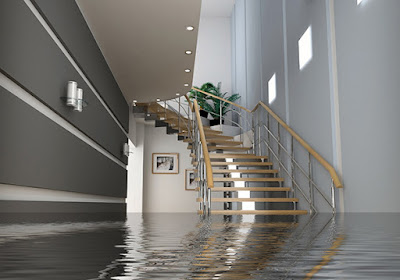
Our House is on a Floodplain. Why? Clay Stratification

Our house in North York/Toronto is on a floodplain.

I learned this recently thanks to a helpful neighbour. I was walking home from dropping off my son at school, and one of our neighbours was doing the same after dropping off his son, and we were both looking at the new construction of a building near the school.

The new building has a giant basement. Two stories. Something similar to an "iceberg home" where most of the house is actually below ground.

My neighbour was laughing at it however and predicted that it was going to get flooded...

And that was when I learned our entire neighbourhood was on a floodplain.

It wasn't something we were told about when we leased the property, but it is definitely an issue.

Now you might think, like I did: "Wait, isn't our house on a hill? How can it be on a floodplain?"

The problem is the soil.

Clay Stratification

Most drainage issues are caused by clay soil. A minor issue will be that you have standing water after a heavy rainfall for less than a day, and it will be more noticeable in your front yard and backyard. Clay soil is more dense than sandy or loamy soil, and therefore, is slower to allow rainwater to filter through it.

Clay Stratification is when you have multiple layers of dense clay, the result of millions of years of rainfall, rivers and flooding, etc. When one layer of clay stratification becomes flooded it acts like a barrier, so that water above it just sits there and can only move sideways, but not down.

Get too much water all at once, and the next thing you know your basement is flooded because it acts like a well where the water can collect. Many basements aren't designed to withstand that much water trying to get in. This is a big problem for many parts of Toronto because clay stratification is actually surprisingly common.

Why does Toronto have so much clay stratification?

Go back 12,000 years ago and all of Toronto, the GTA and the Great Lakes region was under a big inland sea. As time went by the water levels receded and it left behind layers of clay bits and loamy bits, resulting in many layers of clay and loam.

Factor in that Toronto is also effectively an ancient river delta, and yeah... That's a lot of clay.

So what can you do about it?

Knowledge is key.

#1. You need to ask "Is this property on a floodplain?"

And make a note of how the owners respond.

#2. Get it in writing.

Because people do lie about floodplains and it can lead to lawsuits when people later find out that they bought property on a flood plain. (Or bought a house with mold problems. Or bought a house with termites. The previous owners need to be disclosing these problems.)

#3. Ask "What steps have been taken to prevent flooding?"

Because chances are likely if your property is in Toronto, then it is probably on a flood plain. Even if it is on top of a hill.

#4. Get home owners insurance.

But you might also get other types of insurance too. Eg. Buyer's Title Insurance for example. Or Mortgage Insurance if you are getting a mortgage.

And flood insurance if you are in a high risk location.

Basement Flooding on the Rise thanks to Climate Change

Yeah... So this isn't a problem that is just going to go away. Places that aren't traditionally thought as being flood prone these days are getting flooded anyway. Climate Change means that Toronto now has a rainy season from April to May.

And we can still get large deluges of water thanks to freak rainstorms like that one on July 8th 2013.

I was outside when that flood happened. Toronto got 126 mm of rain in only a few hours. And while that doesn't seem like much, remember that water flows downhill and will flood basements, parking garages, subway stations, floodplains, lower streets, etc along the way.

Here's some video of what happened on July 8th 2013:


Thursday, November 18, 2021

Real Estate Bubble making Canada's Wealth Gap Worse

Canada's real estate bubble is going to burst. It is just a matter of when.

With the pandemic and other factors fueling housing prices, plus rampant speculation, it is really just a matter of time before housing prices become unaffordable and the market collapses under economic pressures.

And if you look around at all the economic pressures, you know it is going to happen.

The bubble has to burst. Toronto and Vancouver rank up there with San Francisco and Los Angeles for the most expensive real estate markets, and while Canada's market has been stable... Our median incomes haven't been going up enough to justify the rapid increases in home prices.

Eventually the wealth gap between rich and middle class will make it impossible for even middle class people to afford a house unless they take out huge mortgages they cannot afford. And when the next big recession hits...


Wednesday, November 10, 2021

Super Basements and Iceberg Homes

 Iceberg Homes are pretty much what you imagine them to be. Houses that are bigger below the ground than they actually appear to be. It is a growing trend in architecture (especially for homes belonging to billionaires) where they build a massive underground structure, but have lots of room to store all their things... And for entertaining guests / having parties.

Basically it is just another way for the rich to show off their wealth.

There's only one major flaw: They tend to get flooded easily. Definitely need flood insurance.


Moffat Inspections provides thorough and reliable home inspections throughout Ajax, Pickering, and the Durham Region. The company focuses on uncovering potential issues before they become expensive problems, offering clear and practical reports that homeowners and buyers can actually understand. From foundations and roofs to plumbing, heating, and electrical systems, Moffat Inspections delivers detailed, honest assessments — no gimmicks, no guesswork. For professional property inspections done right, visit moffatinspections.ca.

Recently Popular Posts